
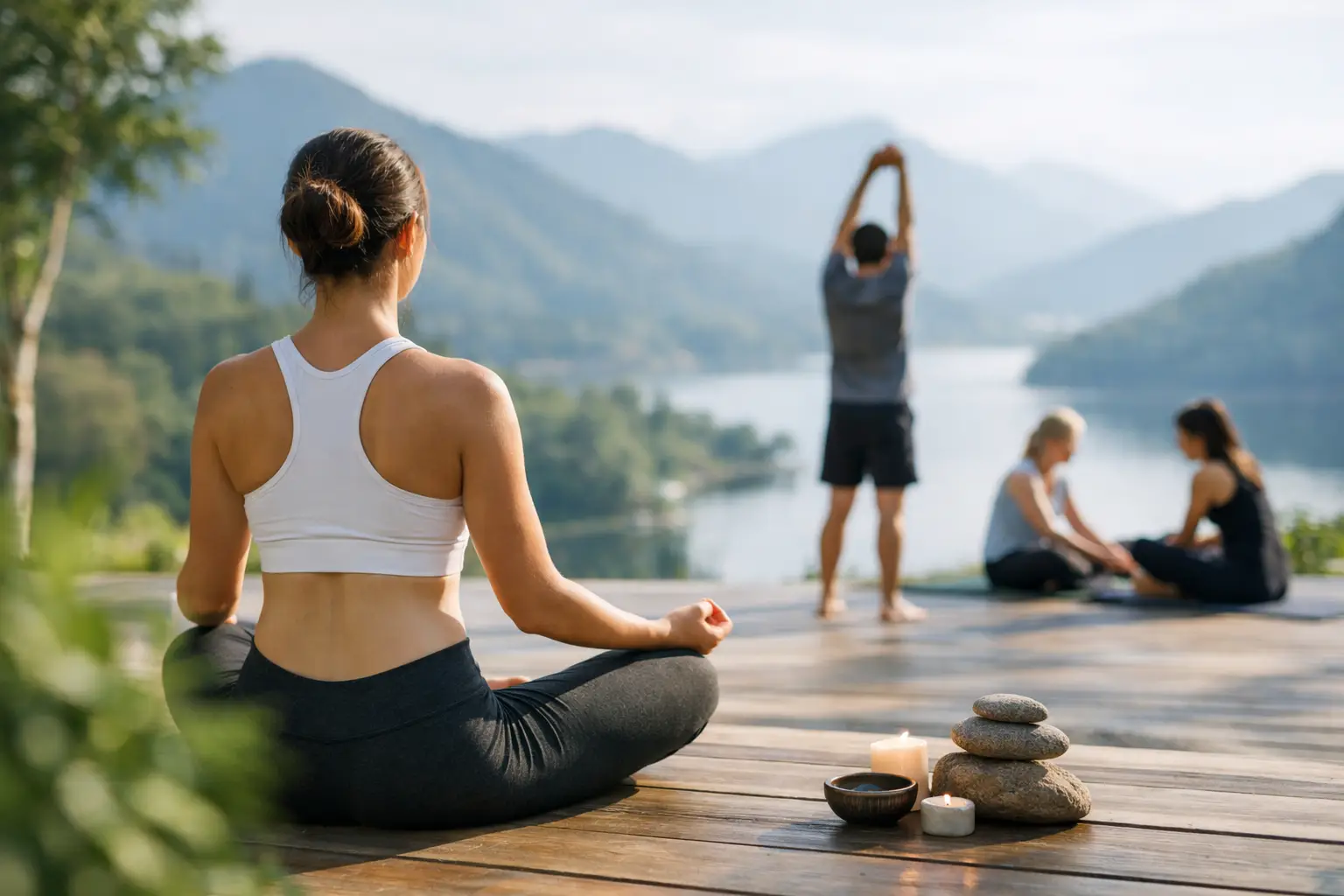
You do not lose motivation because you are lazy. More often, you lose it because your routine is crowded, your energy is low, and your environment keeps pulling you back into the same habits. That is why people keep asking, do wellness retreats help motivation? In the right setting, they can. Not because a few days away magically change your life, but because the best retreats remove friction, create momentum, and give you proof that you are capable of more than your current routine is showing.
That distinction matters. A retreat is not a shortcut around effort. It is a focused environment where effort finally has room to work.
Do wellness retreats help motivation or just feel inspiring?
Some retreats leave people feeling refreshed for a weekend and flat by Tuesday. Others create real traction that carries into daily life. The difference is structure.
Motivation is often treated like a personality trait, as if some people naturally have it and others do not. In reality, motivation is heavily influenced by context. If your days are packed with work, family demands, poor sleep, stress eating, skipped workouts, and very little accountability, your motivation will usually look weak. Change the context, and motivation often rises with it.
A strong wellness retreat changes several things at once. It gives you a schedule, expert guidance, fewer distractions, better food choices, physical movement, recovery time, and a community that is moving in the same direction. That combination can create a powerful reset. You stop negotiating with yourself every hour and start following a plan that supports your goals.
That is why a retreat can feel so different from trying to get back on track at home. At home, every habit competes with ten other priorities. At a retreat, your health becomes the priority for a set period of time. For many adults, especially busy professionals and parents, that is the first time in a long time they have had enough support to build real momentum.
Why motivation often returns in a retreat setting
When people say they want motivation, they often mean they want clarity, energy, and confidence. A good retreat can improve all three.
Clarity comes from stepping out of autopilot. You notice how much your schedule, stress, and surroundings have been shaping your choices. Once that noise quiets down, your goals stop feeling abstract. They become immediate. You can see what you want and what it will take to get there.
Energy improves because the basics finally get attention. Consistent movement, nourishing meals, hydration, sleep support, and recovery all affect drive. If your body feels better, your mind usually follows. It is much easier to stay motivated when you are not dragging yourself through the day.
Confidence grows through action. This is the part many people underestimate. Motivation does not always come first. Often, it shows up after a few completed workouts, a few disciplined meals, or a few moments where you do something you thought would be harder. Success builds evidence. Evidence builds belief. Belief feeds motivation.
That is one reason immersive fitness and wellness retreats can be so effective. You are not only learning what to do. You are doing it, repeatedly, with support. That matters more than a burst of inspiration.
The power of accountability and expert coaching
Left alone, most people make decisions based on mood. In a structured retreat, decisions are guided by a plan.
That does not mean rigid punishment or an intimidating atmosphere. It means your workouts, meals, education, and recovery are organized with purpose. Coaches help you push when you need challenge and adjust when you need modification. Nutrition guidance adds realism to healthy eating. Recovery work keeps the experience sustainable instead of draining.
This kind of accountability can revive motivation fast because it removes guesswork. You stop wasting energy trying to figure out the perfect plan and start following one that is designed to work.
For people who have hit a plateau, this is especially valuable. A plateau often feels like a motivation problem, but it is frequently a strategy problem. Better coaching changes that.
When wellness retreats do not help motivation much
There is an honest answer here: not every retreat is the right fit, and not every guest is ready to use it well.
If a retreat is mostly passive relaxation with very little structure, it may improve stress levels without creating lasting momentum. That can still be valuable, but it is different from a transformation-focused experience.
A retreat can also fall short if it promises quick fixes instead of teaching sustainable habits. If guests leave with a temporary high but no practical way to continue, motivation tends to fade fast.
Personal readiness matters too. If someone attends with the expectation that a retreat will do the work for them, results are limited. The most successful guests arrive willing to engage, be coached, and practice new behaviors. They do not need to be fit already. They do need to be open.
This is where the trade-off comes in. A true results-driven retreat asks more from you than a spa weekend. It may challenge your fitness, your eating patterns, your mindset, and your consistency. But that challenge is often exactly what makes the experience useful.
What makes a retreat more likely to create lasting motivation
The best answer to do wellness retreats help motivation is yes, if the retreat is built for results and not just atmosphere.
First, personalization matters. People stay motivated when the program meets them where they are. If everything is too easy, you feel unimpressed. If everything is too hard, you feel defeated. The right retreat strikes that balance with individualized coaching and realistic progression.
Second, education matters. Motivation lasts longer when you understand why you are doing what you are doing. That includes nutrition education, exercise form, recovery strategies, and practical ways to maintain results back home. You should leave with more than memories. You should leave with tools.
Third, the environment matters. A beautiful setting is not just a luxury. It can reduce stress, improve mood, and make it easier to stay engaged. There is a reason so many people find it easier to recommit to themselves when they are somewhere that feels uplifting. The key is pairing that setting with expert structure, not using the setting as a substitute for it.
That combination is where a premium retreat model can stand out. A well-designed experience blends challenge, support, and comfort in a way that helps guests stay consistent long enough to feel a real shift.
How to keep retreat motivation after you go home
The hardest part of any reset is reentry. You leave feeling strong, focused, and clear, then step back into real life with meetings, errands, family logistics, travel, and old triggers waiting for you. If you do not plan for that transition, motivation can fade even after a great experience.
The good news is that retreat momentum does not have to disappear. It just needs a bridge.
Start by identifying what worked best for you during the retreat. Was it morning movement? Structured meals? Reduced alcohol? Better sleep? Coaching check-ins? You do not need to recreate every hour of the experience. You need to protect the few habits that made the biggest difference.
Keep your first week home simple. Overcommitting is one of the fastest ways to lose momentum. Choose a manageable workout schedule, prep a few reliable meals, and put recovery into your calendar the way you would a work appointment.
It also helps to expect an emotional dip. Many people mistake that dip for failure. It is not. It is just the contrast between a highly supportive environment and normal life. If you know that feeling may come, you are less likely to abandon the progress you made.
Finally, stay connected to accountability in some form. That could mean coaching, a workout partner, regular check-ins, or a written plan. Motivation is easier to maintain when it is reinforced by structure.
A retreat can light the fire, but daily systems keep it burning.
Is a wellness retreat worth it for motivation?
If you want a few peaceful days away, a retreat may feel nice but change very little. If you want a serious reset with coaching, accountability, movement, nutrition support, and recovery built into one immersive experience, it can be one of the fastest ways to rebuild motivation.
That is especially true if you have been stuck in the cycle so many adults know well: start strong, get busy, lose momentum, feel frustrated, repeat. A structured retreat interrupts that pattern. It gives you time to focus, professionals to guide you, and enough repetition to create confidence.
At Gulf Coast Fitcation, that is the point of the experience. Not just to help guests feel motivated while they are away, but to help them see measurable progress and leave with habits they can actually carry forward.
If motivation has been hard to find lately, do not assume you need more willpower. You may need a better environment, a better plan, and a real opportunity to invest in yourself without distractions.
Leave a Reply