
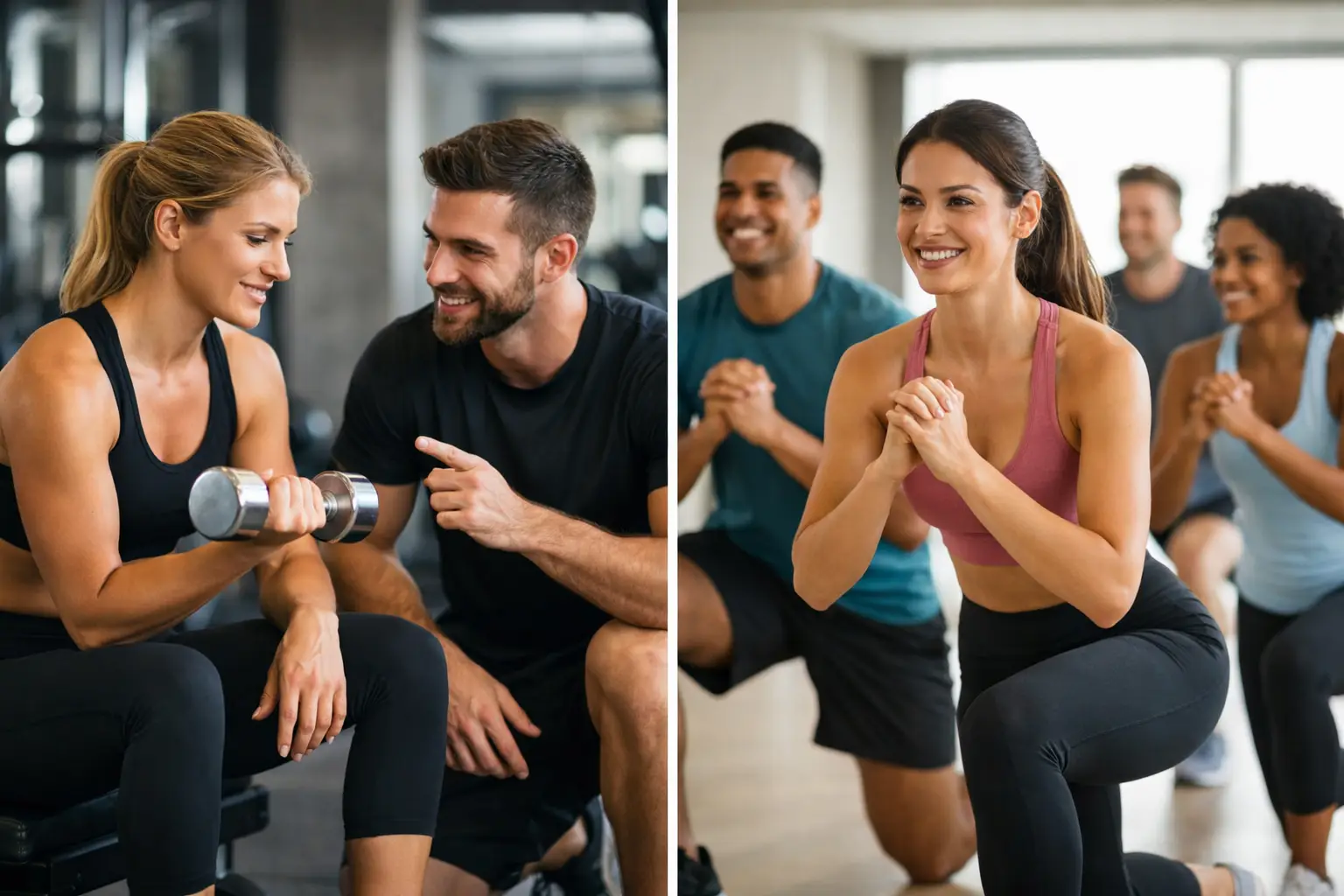
You can work hard in a packed class three mornings a week and still feel stuck. You can also spend money on one-on-one training and wonder why progress feels slower than expected. That is why personal coaching vs group fitness is not a simple question of which one is better. It is a question of which one matches your body, your goals, your schedule, and your ability to stay consistent when life gets messy.
For some people, group fitness creates momentum fast. For others, it hides bad movement patterns, missed recovery, and nutrition gaps that keep results out of reach. Personal coaching offers more precision, but it also asks for a different level of trust, effort, and investment. If you want real, significant, and sustainable results, the right choice depends on what you need most right now.
Personal coaching vs group fitness: what really changes?
The biggest difference is not the workout itself. It is the level of attention behind the workout.
In a group setting, the structure is designed for many people at once. That can be energizing. Music is up, energy is high, and the class moves forward whether you feel motivated or not. For busy adults who struggle to get started, that built-in pace can be powerful. You show up, follow the plan, and leave feeling like you accomplished something.
Personal coaching works differently. The session is built around you – your current fitness level, injuries, movement quality, recovery capacity, confidence, and goals. A strong coach is not just counting reps. They are watching how you move, adjusting intensity, asking the right questions, and making sure your plan actually supports the outcome you want.
That difference matters more than most people realize. If your main goal is general activity and enjoyment, group fitness may be enough. If your goal is body composition change, major weight loss, rebuilding habits, or breaking through a long plateau, personal coaching usually creates a clearer path.
Where group fitness shines
Group fitness has real advantages, and they should not be dismissed. A well-run class can improve conditioning, help you build a routine, and make exercise feel less intimidating than walking into a gym alone.
The community aspect is often the reason people stay with it. When others expect to see you, accountability becomes social instead of internal. That can be a huge win for parents, professionals, and anyone who tends to put their own health last. The workout is already planned, so there is less mental friction. You do not have to decide what to do. You just need to show up.
There is also a motivational boost that comes from shared effort. When the room is moving together, people often push harder than they would on their own. That can improve consistency and confidence, especially in the early stages of a fitness journey.
But group fitness has limits. In most classes, the instructor cannot fully tailor the workout to every person in the room. Even when modifications are offered, not everyone knows which version is best for their body. Some people underwork because they are uncertain. Others overwork because they are competitive. Both can stall results.
Where personal coaching stands out
Personal coaching is often the better choice when the goal is specific and measurable. If you want to lose a meaningful amount of weight, improve body composition, train safely after injury, or understand why your results have stalled, individual guidance gives you more useful data and more direct support.
A good coach does more than create workouts. They help you connect training, nutrition, recovery, sleep, stress, and behavior. That is where lasting transformation happens. Many people do not fail because they lack effort. They fail because no one has looked at the full picture.
That is especially true for adults who have tried to piece things together on their own. Maybe you have bounced between classes, diets, apps, and bursts of motivation. Maybe you know how to work out, but not how to organize a plan that produces visible progress. Personal coaching closes that gap.
It also gives you something group fitness rarely can – immediate correction. Small adjustments in form, intensity, and progression can change both safety and results. Over time, that precision adds up.
The trade-off is cost. Personal coaching is a higher-touch service, and the investment reflects that. For many people, though, the better question is not whether it costs more. It is whether a more customized approach helps you stop wasting time on methods that keep producing partial results.
Personal coaching vs group fitness for weight loss
If weight loss is your primary goal, personal coaching usually has the edge. Not because group classes do not burn calories, but because weight loss is not solved by sweat alone.
You can take great classes and still overeat, recover poorly, or train at the wrong intensity for your current condition. A personal coach can help you align exercise with realistic nutrition habits, recovery needs, and progression. That creates a system instead of a series of workouts.
Group fitness can still play a valuable role in a weight-loss plan. It keeps you active, creates routine, and makes movement enjoyable. But if the scale has not changed despite your effort, the missing piece is often personalization. You may need a strategy that accounts for your metabolism, schedule, stress level, fitness base, and habits outside the studio.
That is why immersive wellness experiences often combine both. You get the energy and momentum of group sessions, plus the focused support of personal coaching, nutrition guidance, and recovery work. In that setting, progress tends to happen faster because every part of the process is working together.
Which option is better for accountability?
This depends on what kind of accountability actually works for you.
If you thrive on community, group fitness can be incredibly effective. The class schedule keeps you honest. The environment lifts your energy. You are less likely to skip when it feels like a shared commitment.
If you need deeper accountability, personal coaching wins. A coach notices patterns. They ask why you missed sessions, why energy is low, why weekend habits keep undoing weekday effort. That level of support is not about pressure. It is about honesty, ownership, and problem-solving.
For people who have started and stopped many times, that distinction is everything. Motivation gets people started. Accountability built on personalization is what keeps them going.
The best choice may not be either-or
The strongest fitness strategy is often a blend. Group fitness provides energy, structure, and consistency. Personal coaching provides direction, adjustment, and a plan designed for your body and goals.
That is one reason retreat-style programs can be so effective. Instead of forcing you to choose between a motivating environment and individualized attention, they give you both. You train in a supportive setting, but you are not left to guess what modifications, nutrition choices, or recovery methods are right for you. At Gulf Coast Fitcation, that combination is built into the experience because meaningful transformation rarely comes from one workout style alone.
This hybrid model makes particular sense if you want accelerated results. In a structured setting, expert coaches can observe patterns quickly, adjust your training, and help you build habits you can carry home. You still get the boost of shared effort, but the plan is not generic.
How to decide what fits your next chapter
Ask yourself a few honest questions. Are you mainly trying to stay active, or do you want a major change in weight, fitness, and lifestyle? Do you already know how to exercise safely, or do you need coaching on form and progression? Do you struggle more with motivation, or with knowing exactly what to do?
If you want convenience, social energy, and a lower-cost way to stay active, group fitness may be the right starting point. If you want a faster, more strategic path with expert eyes on every part of your progress, personal coaching is likely the stronger investment.
And if you are tired of trying hard without seeing enough return, look for an environment that combines structure, accountability, and individualized support. That is where people often stop spinning their wheels and start seeing change they can actually feel.
The best fitness plan is not the one that sounds impressive. It is the one that meets you where you are, challenges you with purpose, and gives you the support to keep going long after the first burst of motivation fades.
Leave a Reply